Posts

Showing posts with the label data center

Where DWDM Use?

Image
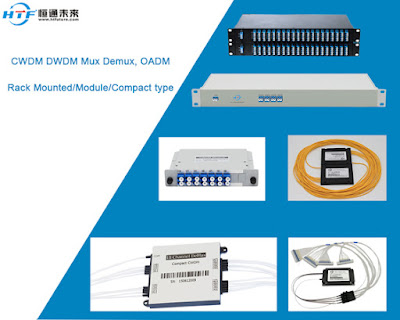
  DWDM is often used by telecommunications, cable and data centers as part of their optical transport network.   Carrier Transport Network The carrier transport network is made up of several layers of aggregation called the access network, metro aggregation network, edge network and the core backbone network. DWDM is most often used in the metro aggregation network and the core backbone network.   DWDM in the metro aggregation network is used to combine data from several cities. As service providers bring more computing capabilities closer to their customers, DWDM is also flexible enough to meet their needs for higher bandwidth aggregation as they begin to converge more data into a single node to compute. The core backbone often deals with the high-speed switching of large amounts of data between their major central offices, which can span across several regions, states or even countries, which is also ideal for using DWDM.   If need more information, welcome ...

Introduction To The WDM

Image
  Synopsis The simultaneous transmission of two or more optical wavelength signals through different optical channels in the same optical fiber is called optical wavelength division multiplexing (WDM) technology. Reuse types Optical WDM includes frequency division multiplexing and WDM Optical frequency division multiplexing (FDM) technology and optical wavelength division multiplexing (WDM) technology have no obvious difference, because light wave is a part of electromagnetic wave. The frequency of light and wavelength has a single corresponding relationship. In general, optical frequency division multiplexing is a subdivision of optical frequencies. Optical channels are very dense. Wavelength division multiplexing (WDM) refers to the coarse division of optical frequency, the optical channels are far apart, and even in different Windows of the fiber. Structure Wavelength division multiplexer and demultiplexer (also known as combined wave/splitter) are placed on both ends of th...

What are the Benefits of DWDM Networks

Image
By deploying a DWDM network, you will gain the following benefits: High Bandwidth and Capacity : DWDM technology achieves higher bandwidth and capacity by multiplexing multiple wavelengths of signals on a single optical fiber compared to conventional devices. In the backdrop of the ever-growing demands of the internet and communication, the high capacity becomes especially critical, especially in domains like high-definition video, cloud computing, and the Internet of Things. Long-Distance Transmission : DWDM technology employs wavelengths with minimal signal loss in the optical fiber transmission process. When paired with Transponders/EDFAs, it can even transmit signals over thousands of kilometers. This attribute is especially important for connecting remote cities, spanning international borders, and linking data centers across continents. The extensive long-distance transmission capability of DWDM greatly extends the reach of data communication, effectively facilitating seamless ...

What Is Data Center?

Image
  Internet Data Center, the English abbreviation is IDC.   The reason why it is not called "DC" directly is mainly to avoid confusion with direct current (Direct Current). Moreover, today's data centers are generally connected to the Internet and focus on Internet services, so it is more accurate to call them "IDC".   From a functional point of view, the data center is an oversized computer room with many servers dedicated to centralized management of data (storage, calculation, and exchange).   According to statistics from industry organizations, the global data traffic processed by data centers in 2020 reached 15.3ZB (1ZB≈1 billion TB), accounting for 99.35% of the global total traffic. In other words, almost all Internet data cannot be separated from the processing of data centers, which shows its importance.   According to popular sayings, data centers are important infrastructure like water plants and power plants. They are the driving force of the digital ...

What is CWDM multiplexer

Image
CWDM (Coarse Wavelength Division Multiplexing) is a technique for combining multiple optical signals on a single fiber by using different wavelengths of light. CWDM technology is widely used in modern communication networks, and it enables significant cost savings while improving network capacity and flexibility. CWDM multiplexers are at the core of this technology, allowing multiple data streams to be combined and transmitted over a single optical fiber. What is a CWDM Multiplexer? A CWDM multiplexer is an optical device that combines multiple wavelengths of light into a single optical signal. It uses the principle of combining different wavelengths of light into one fiber to transmit signals from multiple sources. Each wavelength is modulated with a unique data stream, and the CWDM multiplexer combines these signals into a single fiber. The signal is then transmitted to the receiver where it is de-multiplexed back to its original form. Advantages of CWDM Multiplexer The benefits of ...